What Size Dumpster Do I Need?
The single most common question we get on the phone. Here's how we actually size a job, from a garage cleanout to a full gut renovation, with the real dimensions and weight limits for every size we run.
ReadRockford, IL guide
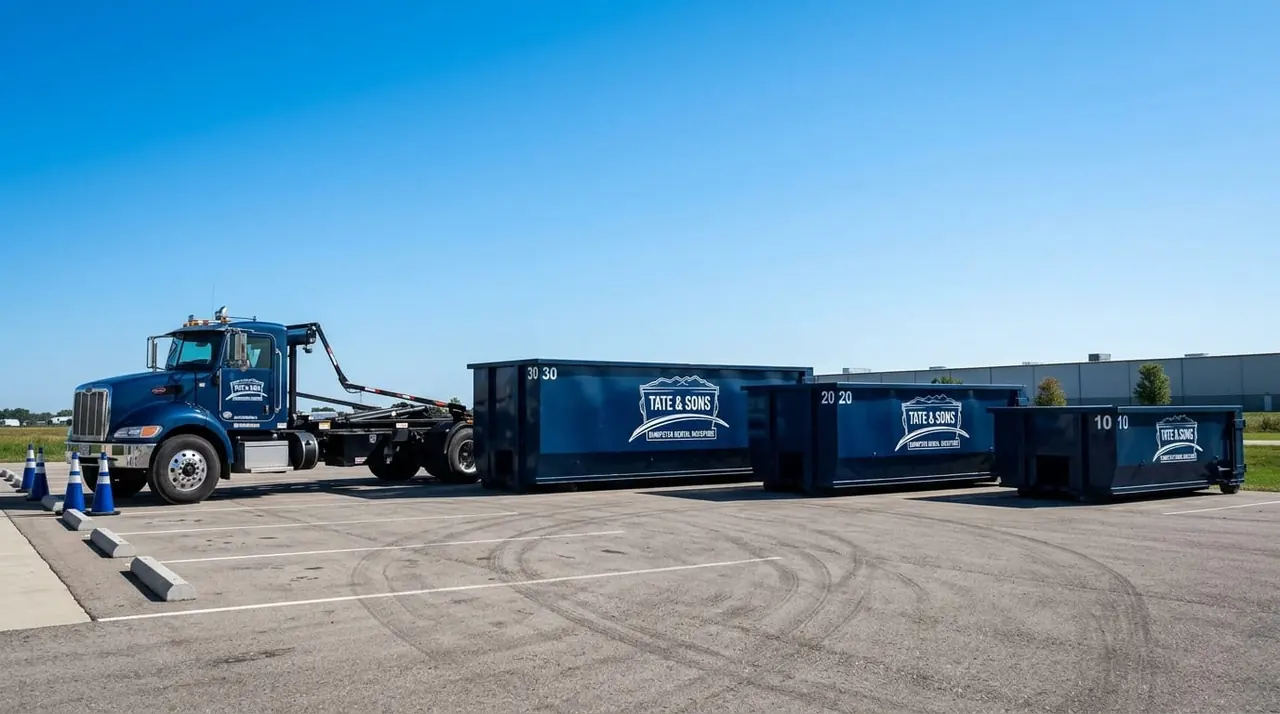
Sizing charts talk in cubic yards. Most people think in projects. Here's what actually fits in each of our five container sizes, based on the jobs we run across Rockford every week.
A sizing chart tells you dimensions and weight limits. It doesn't tell you whether your garage cleanout fits, or whether your kitchen remodel needs the next size up. This guide skips the abstractions and walks through real project types we see regularly around Rockford and Winnebago County, matched to the container size that typically fits each one and the reasoning behind the call. Think of it as a companion to our general sizing guide, with concrete examples instead of a formula.
These are illustrative, typical scenarios built from the range of jobs that come through our yard on S Alpine Rd, not write-ups of specific past customers. Every property and every project is a little different, so use these as a strong starting point and describe your own job when you call. For full specs on every container we run, see our dumpster sizes page.
Example project: a single-room gut job or a small garage cleanout. Stripping one room down to the studs — old drywall, flooring, trim, maybe a closet's worth of built-ins — produces a manageable, contained volume of debris that the 10 yard handles comfortably. It's also the right call for a single-car garage that's become the household's default storage overflow: old paint cans, broken lawn equipment, flattened boxes, and general clutter that adds up in volume but not necessarily in weight. And because the 10 yard is built with a real weight allowance in a compact footprint, it also handles small, dense loads well — a modest concrete walkway removal, or a small roofing tear-off up to roughly 15 squares. If your project is contained to one room, one small structure, or a single-car garage, the 10 yard is usually enough.
Example project: a kitchen remodel or a two-car garage cleanout. A standard kitchen remodel — cabinets, countertops, flooring, maybe a section of drywall opened up for plumbing or electrical — is a mixed load of bulky cabinet boxes and whatever's coming off the counters and floor, and the 15 yard's added length and height over the 10 yard give it the room a full kitchen teardown needs. It's also the size we recommend most often for a genuinely full two-car garage, holding roughly 4–5 pickup truck loads' worth of accumulated clutter, old equipment, and storage overflow. Basement cleanouts and medium-scope roof tear-offs land here too, along with general yard waste and landscaping debris from a substantial cleanup.
Example project: a roof tear-off on a full-size home, or a whole-home cleanout. This is our most versatile container, and it earns that reputation two different ways. For roofing, the 20 yard is one of the two sizes we build our sizing guidance around specifically — it carries the weight allowance to handle a standard single-story or larger home's shingle tear-off without the job hitting a ceiling partway through. For a whole-home cleanout — a typical house being cleared room by room, whether for a move, a downsize, or an estate — the 20 yard's length and capacity handle furniture, boxed belongings, and general household volume from an entire property without needing a second container. It's also the standard call for flooring and siding replacement jobs and larger remodel debris where drywall, old flooring, and fixtures are all coming out together.
Example project: a full gut renovation, or a larger estate clearance. Once a project moves past "remodel" into "gut renovation" — interior walls coming down, most or all finishes stripped, a home being taken back to close to its structural shell — the volume typically outgrows the 20 yard, and the 30 yard's extra height and capacity give a project like that real margin. The same applies to a larger estate clearance where a full house, garage, attic, and basement are all being cleared together rather than just the living spaces. New construction debris and commercial fit-outs of a moderate scale land here too, along with general demolition debris from a substantial project. If a job is going to generate volume steadily over more than a few days, the 30 yard is usually a safer call than filling a 20 yard and needing a second trip.
Example project: a large commercial fit-out or an industrial clear-out. Our largest container is built for high-volume, comparatively light debris — think framing scrap, packaging, drywall offcuts, and general demolition material from a commercial buildout or a major renovation, not dense material like concrete or shingles. A large commercial fit-out clearing an entire retail or office space down to the shell, or an industrial clear-out removing old fixtures, shelving, and equipment packaging at volume, is exactly the kind of job the 40 yard's extra height is built for. Major residential renovations combining a full gut with an addition or a large-scale exterior project can also land here when the combined volume from framing, old finishes, and general debris adds up across a big footprint.
| Project Type | Typical Size | Main Sizing Factor |
|---|---|---|
| Single-room gut job / small garage cleanout | 10 yard | Volume, contained |
| Small roofing tear-off (up to ~15 squares) | 10 yard | Weight |
| Kitchen remodel | 15 yard | Mixed volume/weight |
| Two-car garage cleanout | 15 yard | Volume |
| Full-size home roof tear-off | 20 yard | Weight |
| Whole-home cleanout | 20 yard | Volume |
| Full gut renovation | 30 yard | Volume |
| Larger estate clearance | 30 yard | Volume |
| Large commercial fit-out | 40 yard | Volume, bulky/light |
| Industrial clear-out | 40 yard | Volume, bulky/light |
These are a starting point, not a guarantee — actual homes, roofs, and jobsites vary. When you call, describe the specifics of your project and we'll help you land on the right size the first time.
Look back across the examples above and you'll notice some projects need a bigger container purely because of how much space the debris takes up, while others need it because of how much the debris weighs, even when the pile looks modest. That distinction is behind most of the sizing questions we field. Concrete and roofing shingles are dense enough to hit a container's weight allowance while it still looks far from full. Furniture, cabinetry, and framing lumber are the opposite — bulky and comparatively light, so they run out of room before they run out of weight allowance. If your project mixes both types of debris, lean toward the larger size or ask us about handling the dense material as its own load.
Real jobs rarely line up perfectly with a list of examples. Combining a garage cleanout with a load of yard waste? Our yard waste dumpster service may be worth handling separately. Want a smaller job hauled fast without a container sitting on the driveway for a week? See our junk removal option. Working through an estate cleanout specifically? Our estate cleanout checklist covers that process in depth, and our general what size dumpster do I need guide walks through the full sizing approach.
Whichever example above sounds closest to your job, the fastest way to get it right is a phone call rather than a guess. Tell us what's coming out, roughly how much of it there is, and whether anything dense like concrete, tile, or shingles is involved, and we'll match you with a size that fits without paying for capacity you don't need. Call Tate & Sons Dumpster Rental Rockford at (815) 706-6053 or reach out through our contact page to lock in a size and a delivery time.
Talk to a real person
Call and describe the job. Flat price, stated tonnage, and a delivery time on the same call.
Mon–Sat 7:00am – 6:00pm
From this guide
No — these are illustrative, typical examples based on the range of jobs we regularly run across Rockford and Winnebago County, not write-ups of specific past customers. They're meant to give you a realistic sizing reference, not to serve as case studies or testimonials.
That's common — a garage cleanout with some yard waste, or a remodel that includes a small roofing job. In general, size up to cover the larger category and mention every part of the job when you call so we can flag anything, like concrete or shingles, that needs different handling.
Weight, not just visible volume, drives sizing for dense material. Concrete and roofing shingles can hit a container's weight allowance while it still looks far from full, which is why some smaller-looking projects still need real weight capacity behind them.
You can try, but it's usually a false economy if the project overflows the container or exceeds its weight allowance — both typically mean extra fees or a second haul. If your project sits near the line between two sizes, it's generally simpler to book the larger one upfront.
Call and describe the project directly — what's being removed, roughly how much, and whether heavy material like concrete, tile, or shingles is involved. That beats matching your job to a general example, since every project has its own mix of volume and weight.
Keep reading
The single most common question we get on the phone. Here's how we actually size a job, from a garage cleanout to a full gut renovation, with the real dimensions and weight limits for every size we run.
ReadWe're not going to publish a made-up price range that doesn't match your job. Here's what actually moves the number when you call for a quote, and why a flat, honest price beats a guessed one.
ReadAnytime a Rockford project involves digging — a foundation, a fence line, a downspout drain — Illinois law requires a call to JULIE first. Here's what that actually means for your project timeline.
Read