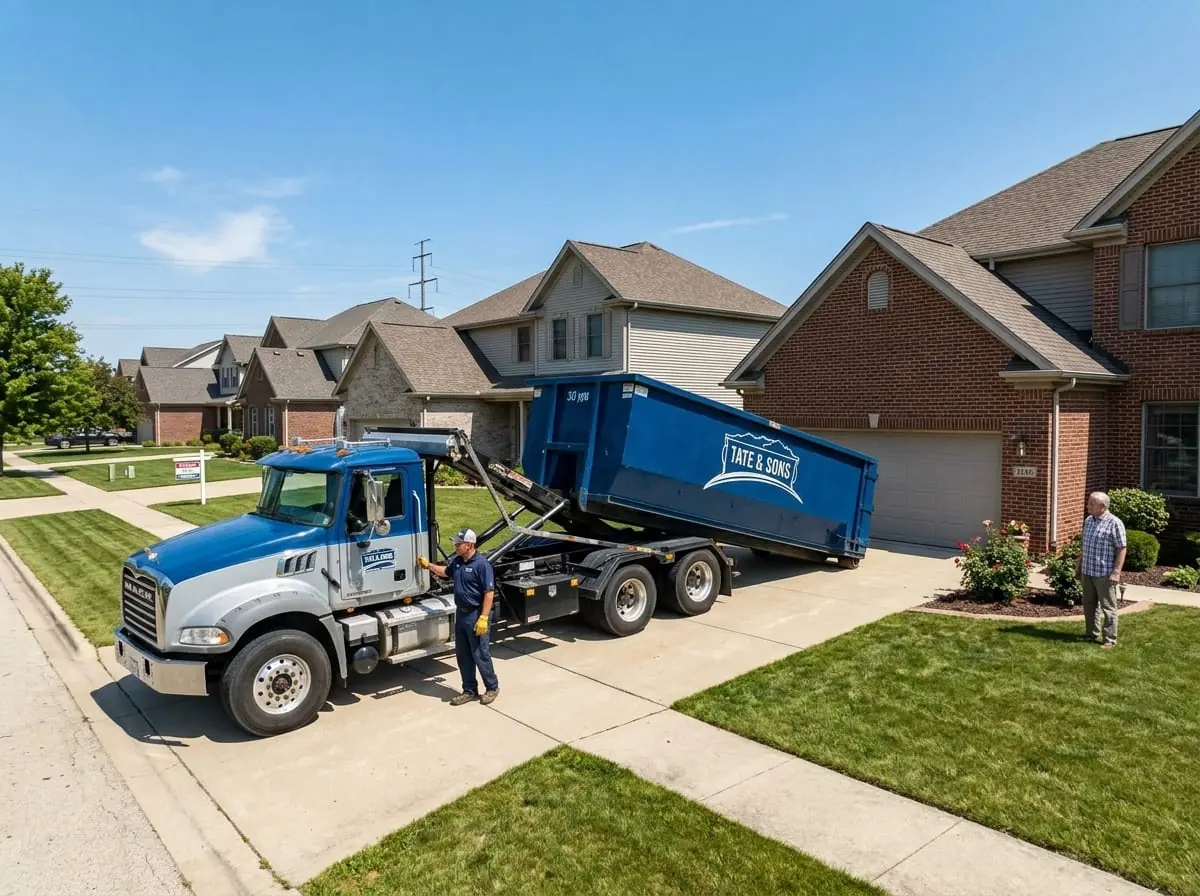
Roofing Tear-Off Dumpster Sizing
Shingles are dense, so a roofing tear-off is a weight problem more than a volume problem. Here's how we size roofing dumpsters for Rockford homes, and why the 10 and 20 yard containers do most of the work.
ReadRockford, IL guide
Clearing a family member's home in Rockford is rarely just a hauling job. Here's a practical checklist for pacing the work, sorting belongings, and sizing the dumpster for a whole-house cleanout.
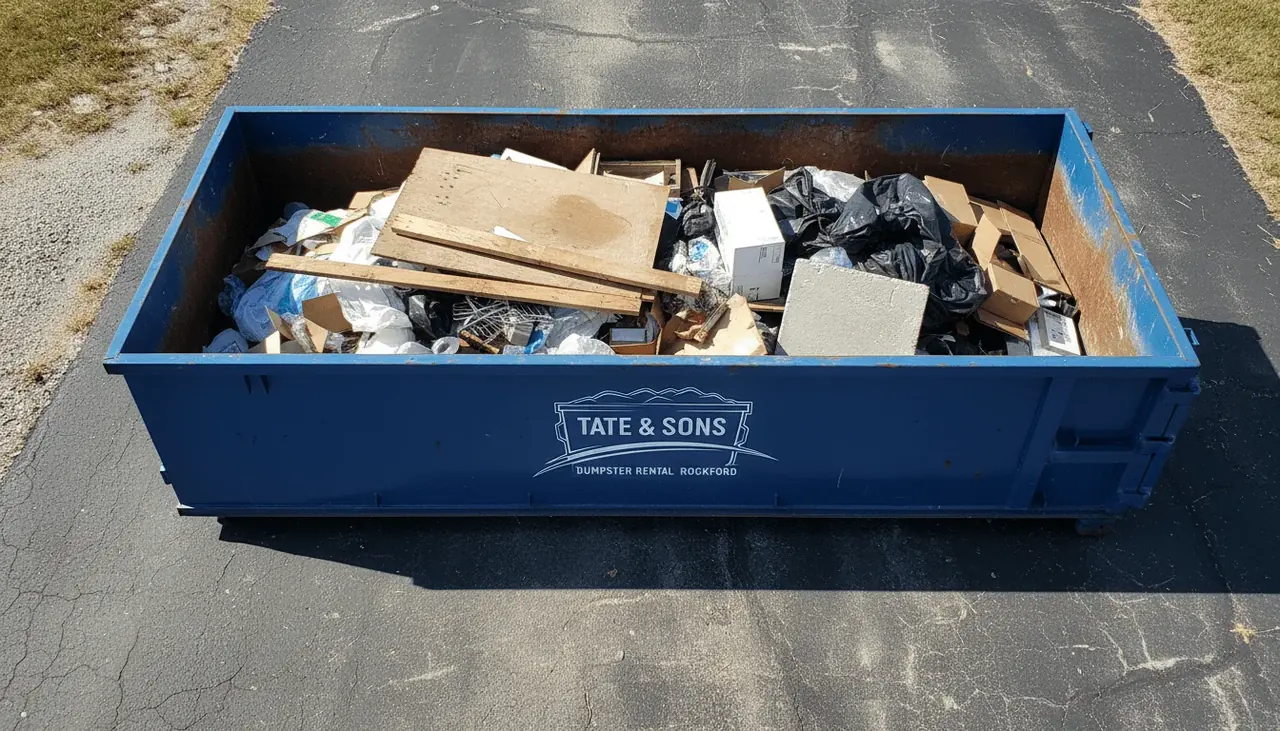
If you're reading this, you're probably standing at the start of clearing out a home in Rockford or somewhere else in Winnebago County — a parent's house, a grandparent's house, a property that's been in the family for decades. An estate cleanout is one of the harder jobs a family takes on, not because it's physically difficult, though it often is, but because every box and closet holds a decision, and those decisions get made while people are grieving or simply exhausted.
This is a practical checklist built around how these cleanouts actually go — pacing the work, sorting without getting stuck, knowing what a dumpster can and can't take, and sizing the right container so you're not caught halfway through a full house with too small a box.
The instinct is to power through a whole house in a single weekend. For a smaller home that's already been mostly decluttered, that can work. For a house someone has lived in for twenty, thirty, or forty years, it almost never does — rushing tends to produce family disagreements over items decided in a hurry, and regret over things thrown out that someone wishes they'd kept. A realistic timeline for a full estate cleanout in the Rockford area runs anywhere from a single long weekend to several weekends spread over a few weeks, depending on the size of the home and how much sorting is needed. If more than one family member is involved, agree on a schedule together before the first weekend starts — more cleanouts get slowed down by scheduling friction between family members than by the actual volume of belongings.
Before any furniture moves, do a dedicated pass through the house for the things that are easy to lose track of once boxes start moving: legal and financial paperwork (wills, deeds, titles, insurance policies, tax and bank records), identification documents, jewelry and cash — check pockets, coat linings, and the backs of closets, since it's common to find valuables tucked away for safekeeping years ago and forgotten — firearms, handled according to Illinois law, and any keys to safes, storage units, or other properties. If the estate is going through probate, talk with the estate's attorney or executor before disposing of anything that could matter to that process.
The single biggest thing that keeps an estate cleanout moving without stalling is a sorting system the whole family uses consistently. A straightforward four-category approach works well: Keep/Family for sentimental items and anything a specific family member has claimed; Donate for usable furniture, clothing, housewares, and working small appliances; Sell/Consign for higher-value furniture, tools, antiques, or collectibles worth an estate sale or a listing; and Dispose for everything damaged, worn out, or simply not worth keeping, donating, or selling — this last category is where the dumpster comes in.
Set a deadline for claiming Keep/Family items and photograph anything contested before it moves. Call ahead before loading donations, since many local charities limit furniture pickups or won't take certain items like older mattresses.
Not every home needs a professional estate sale, but some genuinely benefit from one. If the home has real antiques, a collection of any kind, quality older furniture, or tools and items you're unsure how to value, it's worth a call to a local estate sale company or appraiser before anything leaves the house. If the home has already been mostly cleared over the years, or the remaining belongings are ordinary and well-used, a straightforward donate-and-dispose approach usually gets the job done faster without the added weeks a formal sale can add to the timeline.
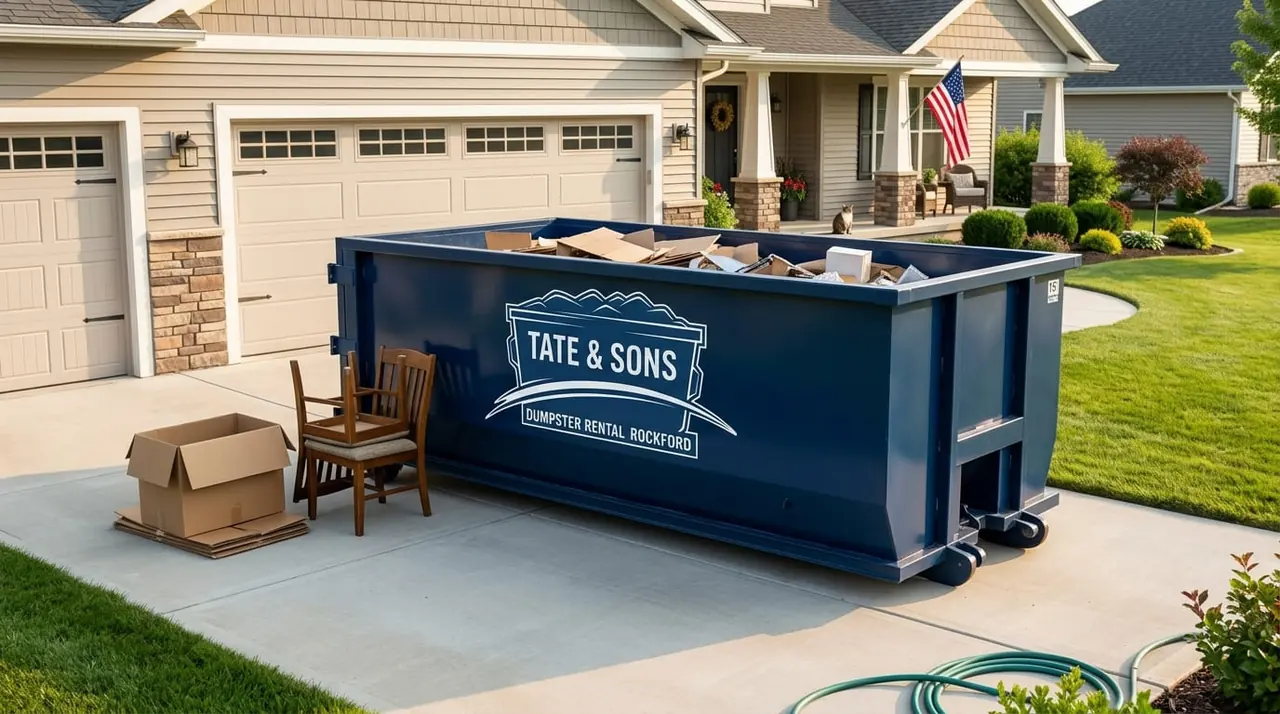
Most of what comes out of a house during an estate cleanout is exactly what a roll-off dumpster is built to handle. Permitted items include general household junk and clutter, furniture, wood, drywall, tile and flooring from any accompanying renovation work, small appliances, yard waste, and roofing shingles if the cleanout includes roof work. A handful of categories need a different disposal path entirely and should never go in a rental dumpster: paint, solvents, and oils; tires; batteries; other hazardous chemicals; gas cylinders and propane tanks; and medical waste. Older homes tend to have accumulated more of these than families expect — a garage with decades of half-used paint cans is one of the most common surprises. Electronics like TVs, monitors, and computers are a related but separate case: Illinois law requires these to go to a certified e-waste recycler rather than the landfill, so pull them aside during sorting rather than boxing them for the dumpster.
If you're not certain whether something belongs in the container, ask us before it goes in — it's a quick question and it's much easier to answer before the item is buried under everything else.
The most common question we get on estate cleanout calls is how big a container an entire house actually needs. For a typical single-family home, a 20-yard dumpster is the most common fit, handling a standard whole-home cleanout with furniture, general clutter, and everyday accumulation. A larger home, or one with a full basement, attic, and garage all being cleared at once, often lands on a 30-yard dumpster instead. A smaller home or apartment, or an estate that's already been substantially downsized, may only need a 15-yard dumpster. When in doubt, size up one tier — estate cleanouts consistently produce more volume than families initially estimate, since closets, attics, and garages are the most underestimated spaces in a house.
Our standard rental period runs seven days, which fits a single-weekend cleanout comfortably and still gives some breathing room if the work runs a little long. Because estate cleanouts often unfold over multiple weekends rather than a single push, talk to us about your expected timeline when you book — we can plan around a project that needs more time on-site than the standard window.
Working room by room instead of jumping around keeps momentum up: start with the home office and any desk areas, where paperwork tends to live; move to bedrooms, usually the most sentimentally loaded rooms, so give these the most time and patience; then kitchen and living areas, which typically move faster once decisions are being made; then closets and storage, which almost always take longer than expected; then garage, attic, and basement — usually the highest volume of pure disposal material, and where the dumpster fills fastest; and finally the yard.
When siblings or extended family are splitting up a parent's or grandparent's belongings, a few ground rules head off most of the conflict we hear about: agree in advance on how contested items get decided, photograph rooms before anything moves, and keep a clearly marked "undecided" pile rather than letting a disputed item stall the whole project. If emotions run high on a given day, it's okay to stop. The dumpster will still be there tomorrow.
You don't have to wait until everything is sorted before booking. Many families schedule the container to arrive at the start of the first cleanout weekend so it's already there as items get sorted, rather than waiting until the end. We treat this as the quiet, personal process it usually is, not a construction job — a clean container placed where you want it, with a straightforward phone conversation about sizing and timing. If your project is smaller — a single room, or items that just need carrying out rather than a container sitting on the property — our junk removal service may be the better fit.
It's worth saying plainly: this is hard, often quietly emotional work, even when it gets framed as "just cleaning out a house." Give yourself breaks, keep a few things that don't make logical sense to keep but matter anyway, and ask family or friends for help with the physical hauling so you can focus your own energy on the decisions that actually need a family member's judgment.
When you're ready to talk through sizing, timing, or anything else about your own cleanout, call Tate & Sons Dumpster Rental Rockford at (815) 706-6053. We're based at 3269 S Alpine Rd in Rockford and help families across Winnebago County through this process regularly.
Talk to a real person
Call and describe the job. Flat price, stated tonnage, and a delivery time on the same call.
Mon–Sat 7:00am – 6:00pm
From this guide
It varies with the size of the home, but most full-house cleanouts take one to four weekends. A smaller, already-decluttered home can sometimes be cleared in a single long weekend, while a larger home with decades of belongings often needs several weekends so the family isn't rushed through sentimental decisions.
A 20-yard dumpster is the most common fit for a standard whole-home cleanout. Smaller homes or already-downsized estates often do fine with a 15-yard, while larger homes with a full basement, attic, and garage typically need a 30-yard. Call us and we'll help size it to your specific home.
Our standard rental period is seven days, which fits most single-weekend cleanouts comfortably. If your estate cleanout is expected to run over multiple weekends, tell us when you book and we'll plan the timeline around your project.
Yes — furniture, general household junk, and small appliances are all permitted and are exactly what the dumpster is built to handle during a cleanout, along with wood, drywall, tile, flooring, yard waste, and roofing shingles if applicable.
Paint, solvents, oils, tires, batteries, other hazardous chemicals, gas cylinders, propane tanks, and medical waste are all prohibited and need a separate disposal path. Electronics like TVs, monitors, and computers also can't go in the dumpster under Illinois law — those need a certified e-waste recycler.
Keep reading
Shingles are dense, so a roofing tear-off is a weight problem more than a volume problem. Here's how we size roofing dumpsters for Rockford homes, and why the 10 and 20 yard containers do most of the work.
ReadSame-day delivery is available in many areas around Rockford depending on availability — here's what that actually means, and how to give yourself the best shot at getting a container fast.
ReadA crew that hauls it for you, or a container you fill at your own pace — both get junk out of a Rockford property, just in different ways. Here's how to decide which fits your project.
Read