Illinois Landscape Waste Landfill Ban Guide
Grass clippings, leaves and brush legally can't go to a landfill in Illinois. Here's what that means in practice, and how it changes how yard waste dumpster loads get handled.
ReadRockford, IL guide
The permit question comes down almost entirely to where the container sits. Here's the practical difference between a driveway delivery and a street placement, and what to do about each.
After sizing, the second most common question we get is some version of "do I need a permit for this?" The honest answer is that it depends almost entirely on where the container is going to sit, and once you understand that distinction, the rest of the question mostly answers itself.
Here's the practical breakdown we walk homeowners and contractors through every week, along with what to do if your project falls into the category that does need a permit.
Most people renting a dumpster for the first time have never had to think about where a large container is allowed to sit, and it's a reasonable thing to wonder about before committing to a delivery date. The good news is that the answer usually isn't complicated once you know which side of the private-property line your delivery spot falls on — and if you're not sure, that's exactly the kind of question we're happy to help sort out on the phone before anything is scheduled.
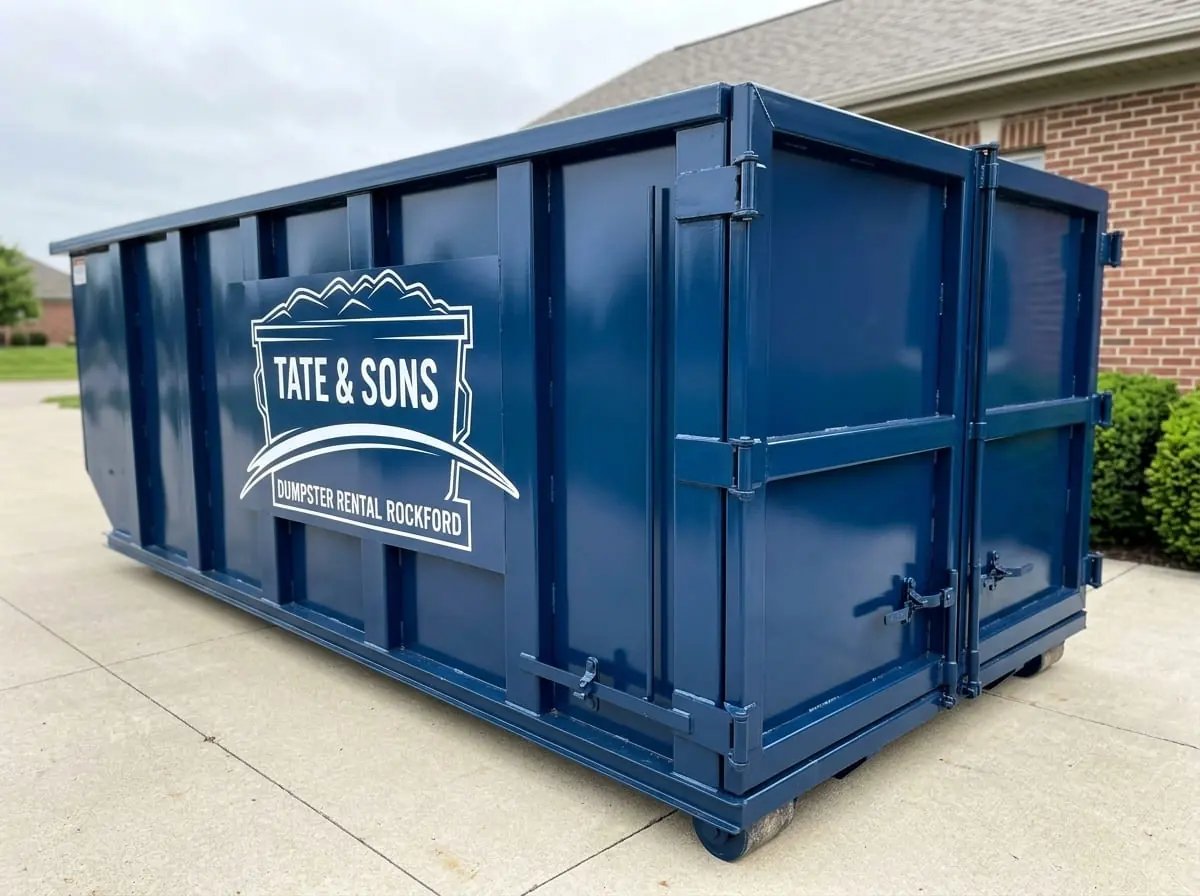
The dividing line that matters is whether the container sits entirely on your own property or extends onto public space — a street, curb lane, or sidewalk. A dumpster placed on a private driveway, in a yard, on a private parking lot, or anywhere else fully within your property line typically does not require a permit from the City of Rockford. This covers the large majority of residential deliveries we make — driveway cleanouts, remodel projects, roofing tear-offs and construction jobs on a homeowner's or contractor's own lot.
A dumpster placed on a public street, in the curb lane, or on a sidewalk is a different situation. Because that space belongs to the city rather than to you, temporary placement there can require a permit from the City of Rockford before the container goes down. This comes up most often on tight urban lots — older Rockford neighborhoods with short or nonexistent driveways, commercial storefronts downtown with no on-site parking to spare, or job sites where the only practical spot for a roll-off is the curb lane in front of the property.
A dumpster sitting in the street isn't just occupying a parking spot — it's a large, stationary obstruction in a space that's meant to stay clear for traffic flow, street sweeping, snow removal, emergency vehicle access, and other public uses. The permit process gives the city visibility into where temporary obstructions are placed, for how long, and lets them account for things like sight-line safety at intersections or driveways, reflective markings or lighting if the placement runs into low-visibility hours, and coordination with any scheduled street work in the area. None of this applies to a container sitting on your own driveway, which is why private-property placement is generally left permit-free.
Because permit processes are handled by the city rather than by us, timelines can vary depending on the season and how busy the permitting office is. The practical takeaway is simple: if you already know your property doesn't have room for a driveway delivery, don't wait until the week you need the container to start that conversation. Building in extra lead time on the front end of your project costs you nothing and protects your schedule if the process takes longer than expected.
If your property genuinely doesn't have room for the container anywhere except the street — a common situation on some of Rockford's older, tighter residential blocks and in parts of downtown — the right move is to contact the City of Rockford before delivery day, not after the container is already sitting at the curb. Requirements and processing times can vary, so give yourself lead time rather than assuming it can be arranged the same week you need the container. When you call us to schedule delivery, tell us up front if your property doesn't have driveway space; we deal with this regularly and can help you think through the placement and the timing before it becomes a problem on delivery day.
Even with a permit in hand, a few practical points still apply to any street placement: the container needs to be positioned to keep sightlines clear at driveways and intersections, and depending on the location and duration, reflective markers or barricades may be expected to keep the placement visible and safe, especially after dark.
The two mistakes we see most often both come from assuming the rule is the same everywhere. Some homeowners assume every placement needs a permit and either delay their project asking about paperwork they don't actually need, or pay for something unnecessary because a driveway delivery never required it in the first place. Others assume the opposite — that because their last dumpster sat in the driveway with no issue, a street placement for a different project will be just as simple, and end up needing to sort out a permit after the container is already delivered, which is a harder position to be in than sorting it out beforehand. Knowing which situation you're actually in before you call saves time either way.
Placement questions cluster in a few predictable parts of the city. Older residential blocks close to downtown and along the Rock River corridor were built well before modern driveway standards, and a lot of that housing stock has short driveways, narrow lots, or none at all, which pushes container placement toward the street more often than in newer subdivisions further out. Downtown and near-downtown commercial storefronts face a similar issue — many were built with no dedicated off-street parking or loading area, so a renovation or fit-out project there is more likely to need street-side placement than a suburban commercial site with a full parking lot. If your project is in one of these areas, it's worth asking about placement options when you first call rather than assuming the standard driveway approach will apply.
Commercial properties and active construction sites can add another layer to the placement question. A site with a fenced perimeter, a designated staging area, or ongoing excavation work may have its own access considerations independent of the general public-property rule, and a general contractor managing a larger job may already be coordinating permits or right-of-way access with the city for other parts of the project. If you're a contractor and this is a multi-trade job, it's worth folding the dumpster placement into whatever site logistics and permitting conversation you're already having with the city, rather than treating it as a separate issue.
For the majority of Rockford deliveries — driveway cleanouts, remodels, roofing jobs, construction sites with room for the container on the lot — this is a non-issue. You call, we deliver, no permit paperwork required. If your property doesn't have that room and street placement is the only option, tell us when you call so we can help you plan around the City of Rockford's process rather than discovering the issue on delivery morning. Either way, we'd rather talk through your specific property with you on the phone than have you guess at a rule that depends entirely on where the container is going to sit.
Talk to a real person
Call and describe the job. Flat price, stated tonnage, and a delivery time on the same call.
Mon–Sat 7:00am – 6:00pm
From this guide
Generally no. A dumpster placed entirely on private property — a driveway, yard, or private lot — typically does not require a permit from the City of Rockford. Most residential deliveries fall into this category.
If the container needs to sit on a public street, in the curb lane, or on a sidewalk rather than fully on your own property, a temporary permit from the City of Rockford may be necessary. This usually comes up on tight lots without enough driveway space.
As early as you can once you know driveway placement isn't an option. Processing time can vary, so contact the City of Rockford before your planned delivery date rather than the same week you need the container.
You risk a compliance issue with the city and a possible delay or relocation of the container after the fact. It's much easier to confirm what's required before delivery than to sort it out once the dumpster is already at the curb.
Tell us when you call to schedule. We deal with tight-lot placements across Rockford regularly and can help you figure out whether the container fits on your property or whether you'll need to look into street placement and a City of Rockford permit.
Keep reading
Grass clippings, leaves and brush legally can't go to a landfill in Illinois. Here's what that means in practice, and how it changes how yard waste dumpster loads get handled.
ReadRockford was once the second-largest furniture manufacturing city in the country. A lot of what we haul today comes out of the same buildings that heritage left behind.
ReadThe Rock River is the reason Rockford exists where it does, and a lot of the cleanup and renovation work we haul debris from happens within a few blocks of its banks. Here's what makes a riverside job different.
Read