Rockford grew up around the Rock River. The river is the reason the city sits where it sits, the reason the old furniture factories were built where they were built, and the reason so much of the housing stock we haul debris out of — from turn-of-the-century homes near downtown to newer construction further out along the water — has some kind of relationship with it, whether that's a backyard that slopes down to the bank or a foundation that has weathered more than a few spring high-water seasons.
We run containers to riverside and river-adjacent properties all over Rockford, and while the debris itself is often ordinary — old decking, storm-damaged fencing, renovation waste, yard debris — the logistics of getting a dumpster onto a property near the water, and the timing of when that work happens, are different enough from a standard subdivision job that it's worth its own guide.
Why So Much Rockford Property Work Happens Near the River
The Rock River runs right through downtown Rockford, and the neighborhoods that grew up along it are some of the oldest in the city — which means a lot of the homes and commercial buildings near the water are also some of the oldest we work on. Older housing stock means more renovation, more roof replacements, more foundation and drainage work, and more of the kind of debris that comes from updating a property that has been standing for a long time. Add in the newer residential development that has continued to fill in along and near the river over the years, and riverside and river-adjacent cleanup and renovation work is a steady part of what we do.
This isn't a marketing angle for us — it's just where a lot of Rockford actually lives and works. The river shaped the city's furniture-manufacturing heritage a century ago, and it still shapes where people build, buy, and renovate today.
What Riverside Debris Actually Looks Like
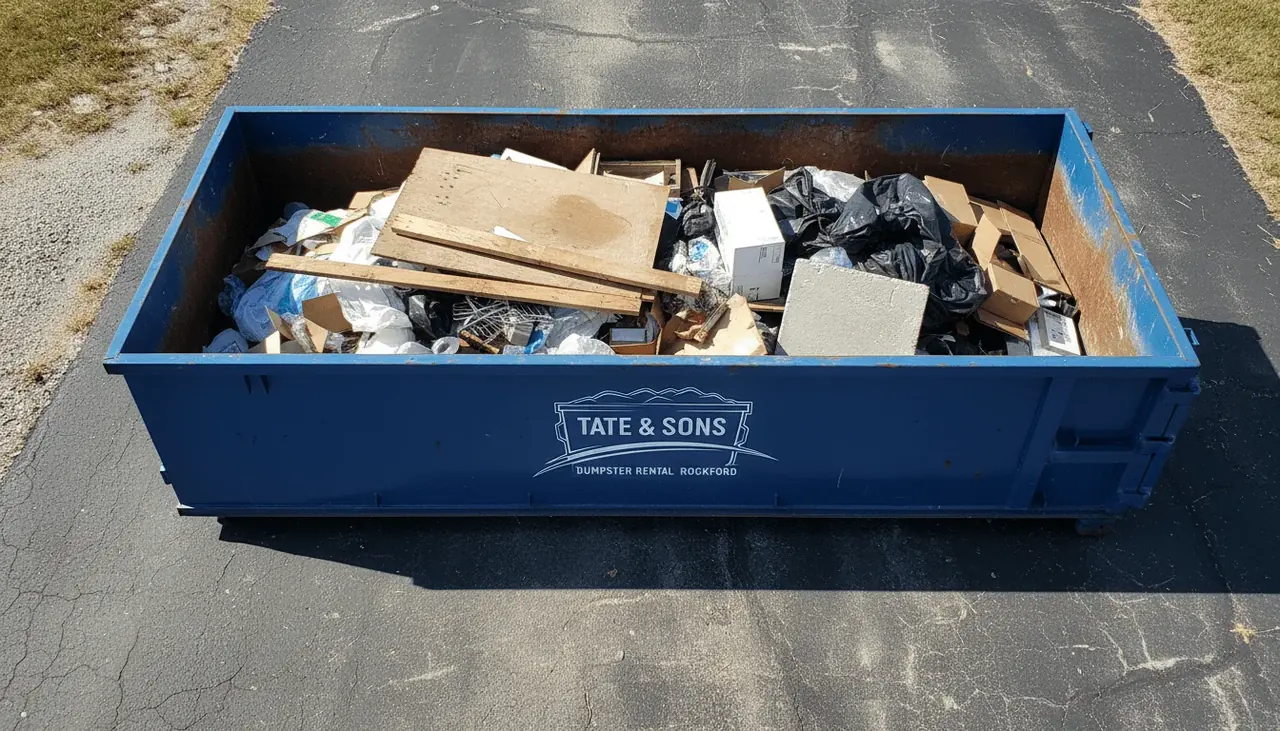
The debris we see from properties near the Rock River tends to fall into a few recurring categories. Old decking and dock structures are common — wood that has spent years exposed to moisture off the water tends to rot faster than the same lumber would elsewhere, so deck and dock rebuilds happen more often on riverside lots than on a typical dry subdivision property. Retaining wall and erosion-control work is another one — a bank that has shifted or a wall that has started to lean generates a mix of broken timber, stone, and sometimes concrete that needs its own kind of container. Storm and wind debris after a hard weather event tends to hit riverside trees and older fence lines first, since they're more exposed. And general renovation debris from updating an older riverside home — old flooring, plaster and drywall, cabinetry, fixtures — is no different from what comes out of any older Rockford home, just with a property that sits a little closer to the water.
None of this requires anything exotic from us. It's the same roll-off containers we run everywhere else in Winnebago County. What changes is where the container goes and when.
Timing: Spring Runoff and Seasonal Water Levels
The Rock River's water level moves with the season, and spring runoff can bring the bank noticeably higher than it sits in late summer or fall. If you're planning outdoor work on a riverside lot — a deck rebuild, retaining wall repair, or heavy yard cleanup — it's worth thinking about that seasonal swing before you book a container. A dumpster placed too close to a bank that floods seasonally is a problem nobody wants to discover after the fact, and softer, saturated ground near the water in early spring can make it harder for a delivery truck to safely position a loaded container without additional planning.
We're happy to talk through timing on a riverside job when you call — if your property has flooded in past springs, or the yard stays soft longer than the rest of the neighborhood, tell us and we'll plan placement and timing around it rather than finding out on delivery day.
Placement Logistics on a River Lot
Riverside lots in Rockford vary a lot in shape. Some are standard city lots that happen to back up to the water; others are narrower, longer parcels running down toward the bank, sometimes with limited driveway or street access on the water side. A few things make placement smoother on these properties: tell us up front if the lot slopes toward the river, since we want the container sitting level and stable rather than tilted toward soft or sloped ground; flag any easements, retaining walls, or fixed structures near where you'd want the box, since riverside lots often have more of these than a standard property; and let us know if the closest hard surface for the container is some distance from where the actual debris is coming from, since that affects how the crew plans the haul from the work area to the box.
A phone call before delivery day, describing the lot and where you want the container, heads off most of the placement issues that come up on riverside properties specifically.
Keeping the River Clean While You Clean Up
Working near the water comes with an obvious responsibility: keep debris, chemicals, and loose material out of the river itself, not just out of the landfill. A few practical habits matter here. Tarp or cover loose, lightweight debris in the container if it's sitting near the water during a windy stretch, so nothing blows loose toward the bank. Keep paint, solvents, oils, and other household or renovation chemicals well away from the container and never rinse them out anywhere near the water — these are prohibited in a rental dumpster everywhere we serve, and it matters even more on a property that drains toward the Rock River. And if your project includes yard waste — brush, leaves, grass clippings, or trimmed vegetation from clearing a riverbank — remember that Illinois' landscape waste rules keep that material out of the landfill stream entirely, so it needs its own handling rather than going in with construction or household debris.
Sizing a Container for a Riverside Project
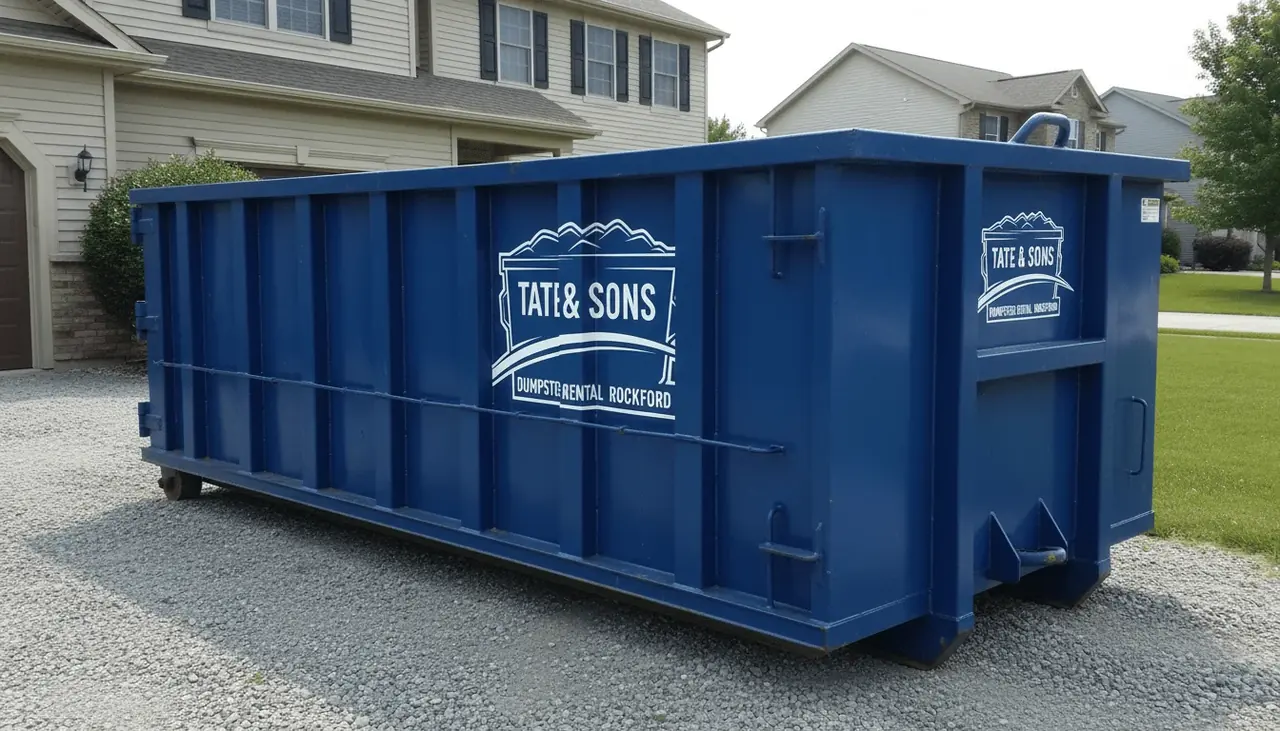
Sizing works the same way it does anywhere else in Rockford — it comes down to what's coming out and how much of it there is, not the fact that the property happens to sit near the water. A deck or dock teardown is usually a modest job that fits a 10 or 15 yard container. A full riverside home renovation, especially on an older property with plaster, old flooring, and outdated fixtures all coming out at once, often calls for a 20 yard. A larger property clearing a substantial amount of bank vegetation, old fencing, and structural debris together may be better served by a 30 yard. If you're not sure, describe the project when you call and we'll size it based on the actual scope, not a guess.
Booking a Container for Your Rockford Riverside Property
Whether you're rebuilding a dock, clearing storm debris off a bank, or renovating a home that's been standing near the Rock River for a hundred years, we've placed containers on enough riverside lots around Rockford to know what questions to ask before the truck shows up. Call Tate & Sons Dumpster Rental Rockford at (815) 706-6053 and describe your property and what you're clearing, and we'll help you size it and plan the placement around your lot. We're based at 3269 S Alpine Rd in Rockford and run containers across Winnebago County, Monday through Saturday, 7:00 AM to 6:00 PM.